Safety Resources

ANSI/PGMA G300 Standard

What Is ANSI/PGMA G300?
The Portable Generator Safety & Performance Standard.

ANSI/PGMA G300 (G300) — Safety and Performance of Portable Generators is the American National Standard that sets safety and performance requirements for portable generators used at home, on jobsites, and for recreation. It’s developed by the Portable Generator Manufacturers’ Association (PGMA) and approved through the ANSI consensus process.

Why it matters: G300 standard helps drive safer generator designs and clearer information for consumers—especially around carbon monoxide (CO) risk reduction—while reminding everyone that safe generator operation is always essential.

What the Standard covers:
  • CO hazard migration: Onboard sensing and automatic shutoff features that help reduce risk when dangerous CO accumulates.
  • Construction & labeling: Requirements for enclosures, wiring, fuel and exhaust routing, warnings, and instructions.
  • Performance & durability tests: Stability and rough-handling, start/ stop and overspeed, electrical output checks, and more.
What it means for you:
  • Safer by design: Portable generators that comply with the G300 standard include layered safety features informed by G300.
  • Clearer instructions: Standardized warnings and user information support safer decisions.
  • Smarter shopping: You can ask, “Does this model conform to ANSI/ PGMA G300?” and learn how its CO-sensing works.
How to Tell if Your Generator Conforms to G300
  1. Check your manual: Look for “ANSI/PGMA G300” in the safety/compliance section.
  2. Check labels/packaging: Some manufacturers include a reference to G300 on the unit or box.
  3. Check the website: Search your model number on the manufacturer’s site.
  4. Ask support: Contact customer service with the model and serial number.
  1. Shopping tip: If you’re buying, ask the retailer or manufacturer whether the model conforms to ANSI/PGMA G300.

ANSI/PGMA G300 Standard
Milestone Timeline

The following timeline chronicles the development and evolution of the ANSI/PGMA G300 Standard for the safety and performance of portable generators, based on the provided sources.
2009

Foundation

  • The Portable Generator Manufacturers’ Association (PGMA) is formed to develop safety and performance standards for the industry.
June 2015

Initial Launch

  • ANSI/PGMA G300-2015 is first achieved, establishing a comprehensive performance and safety standard for portable generators.
2016-2017

Technical Evolution

  • Feb-May 2016: PGMA begins human factors analysis and creates a framework for Carbon Monoxide (CO) safety.
  • Nov 2016 - Feb 2017: Extensive CONTAM simulation analysis is conducted. Based on the results, the standard focuses on an effective CO shutoff approach.
  • April 2017: A Steering Committee is formed, including non-member stakeholders like the CPSC, Consumers Union, and state health departments to ensure broad consensus.
April 2018

Major Safety Revision (G300-2018)

  • ANSI approves the G300-2018 revision.
  • Key Evolution: This version introduces the required automatic CO shut-off technology. (March 2020 was the effective date for this voluntary standard).
  • Specifics: Generators must sense dangerous CO levels and shut down before concentrations exceed 800 ppm, followed by a 5-minute notification light.
March 2020

Full Industry Compliance

  • The effective date for all relevant portable generators to comply with the G300-2018 safety requirements.
April 2020

Errata Update

  • Difference: A minor administrative update replaces the required compliance logo on packaging with mandated safety text.
December 2023

The 2023 Iteration (G300-2023)

  • ANSI approves ANSI/PGMA G300-2023 on December 19, 2023.
  • Key Differences:
    • Thresholds are reduced below 2018 levels to further address potential injuries from misuse.
    • New safety and performance requirements are added for generators fueled by natural gas.
    • Coverage maintains testing for electrical/mechanical hazards, drop tests, and temperature tests for all units 15 kW or smaller.
January 1, 2025

G300-2023 Compliance Date

  • Effective date for all relevant generators manufactured on or after this date to comply with the G300-2023 standard.
October 2025

Next Revision Cycle Begins

  • PGMA initiates the canvass process for the next version.
  • Proposed Differences: The future revision aims to include updated flexible hose requirements, updated references to OPEI B71.10, and other miscellaneous technical refinements.
Generate Action
Make your voice heard. Help us keep proven CO-shutoff technology on store shelves, maintain consumer access to safe portable power—especially during emergencies—and avoid introducing new heat-related hazards or unaffordable designs.

PGMA’s Quick Safety Reminders

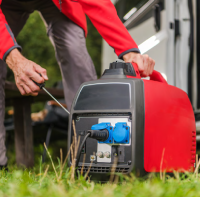
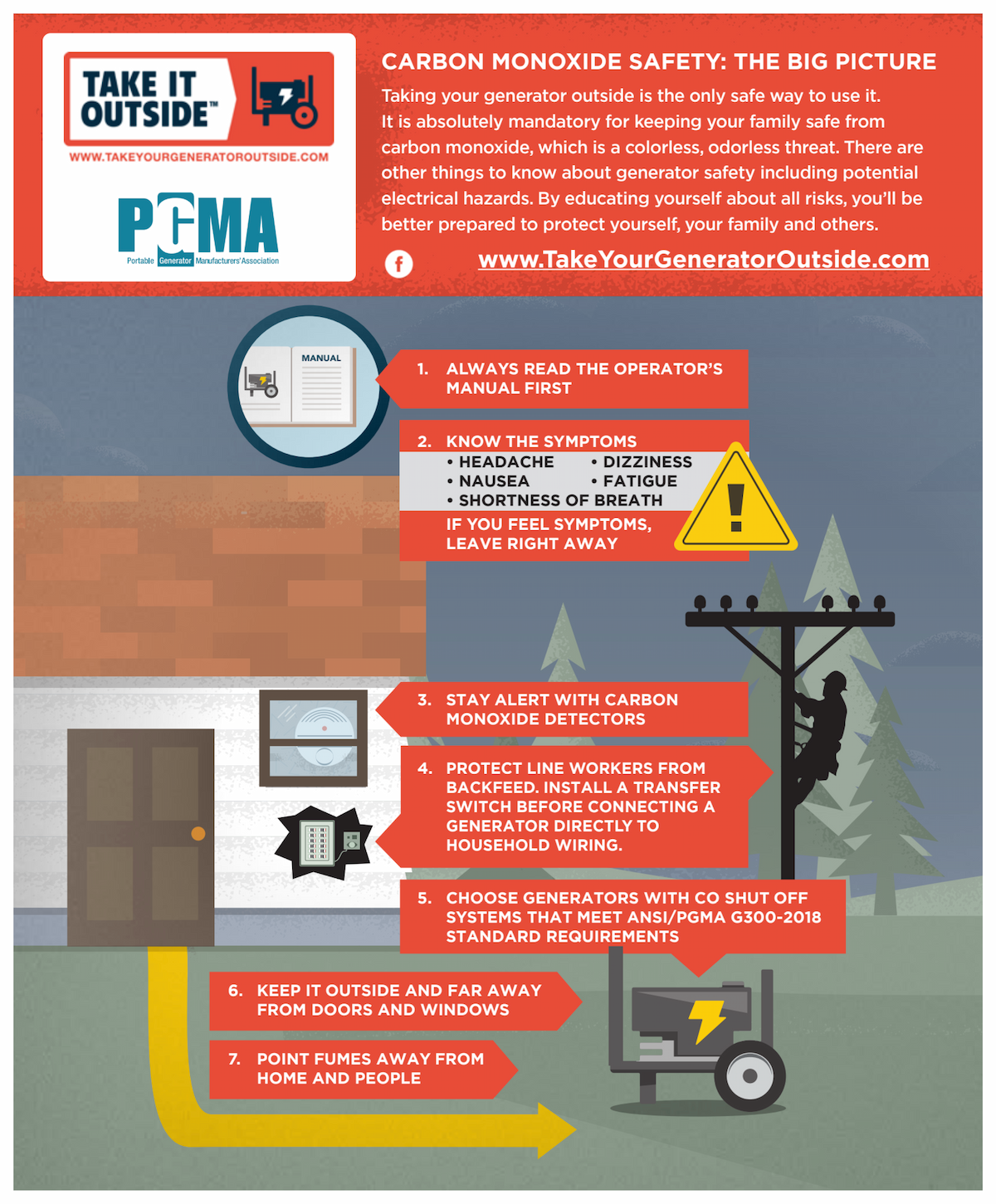
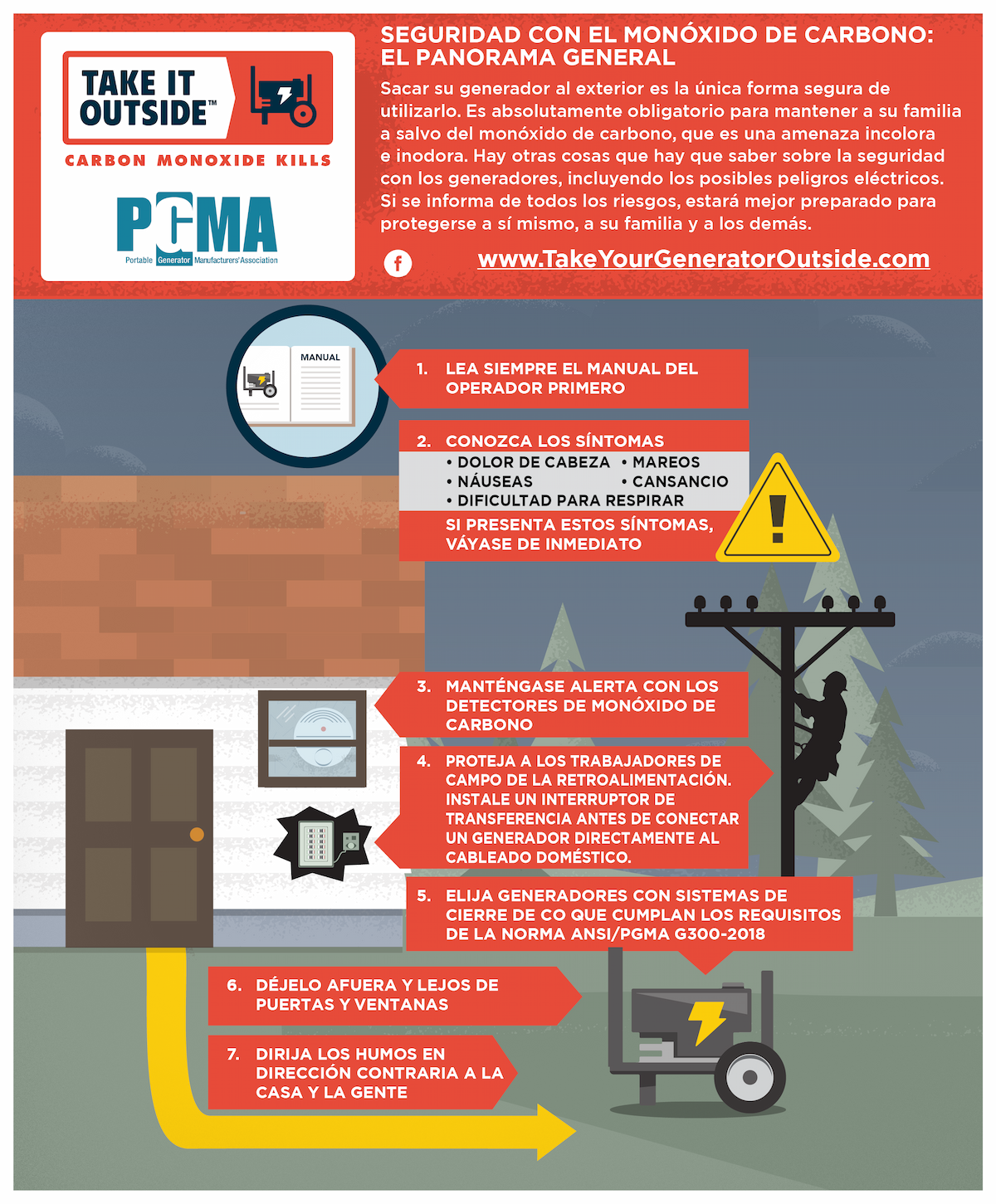
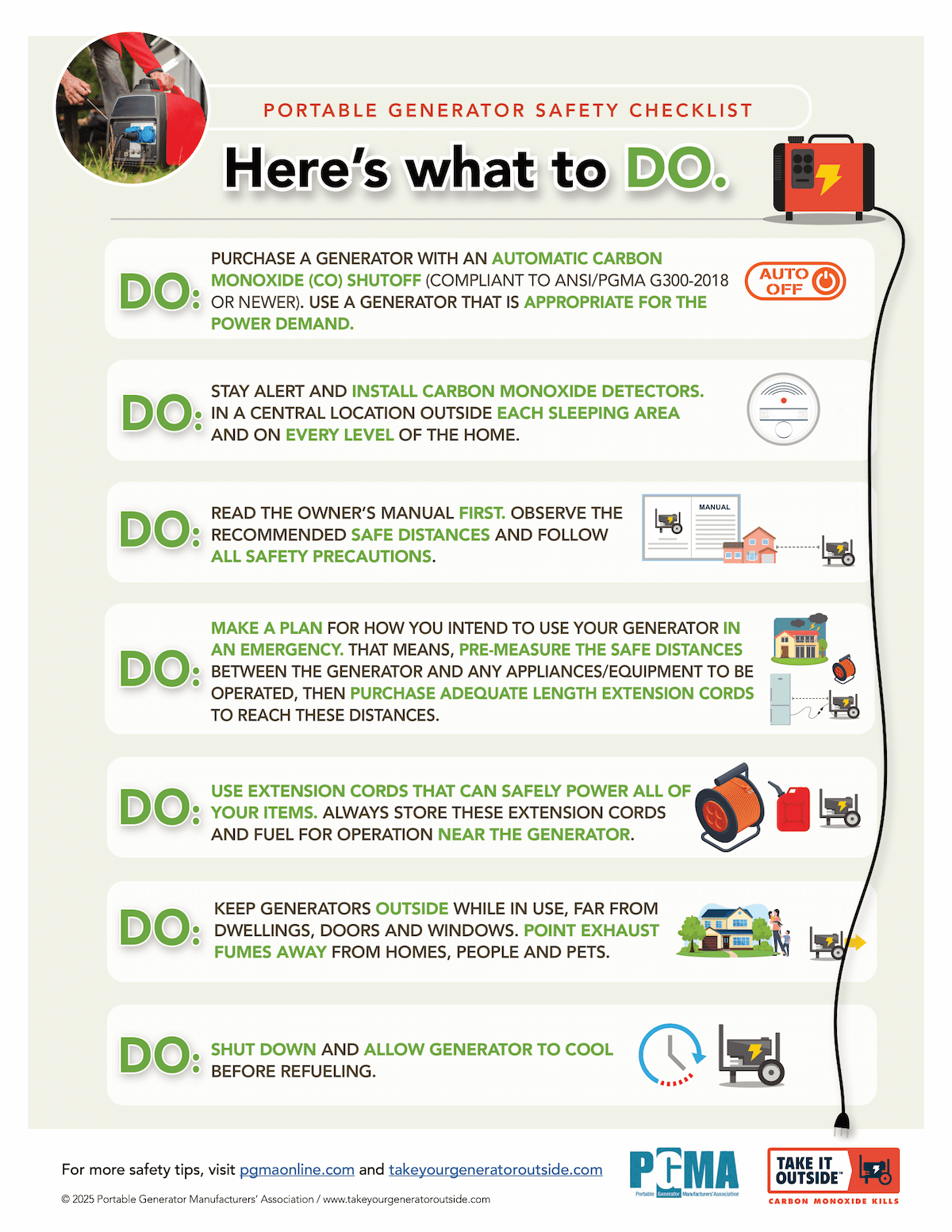
Always operate outdoors far from doors, windows, and vents, with exhaust pointing away from openings.
Install Carbon Monoxide Detectors in your home and test them regularly.
Use heavy-duty, outdoor-rated cords for essential appliances, or have a licensed electrician install a transfer switch or interlock with an exterior inlet if you want to power circuits.
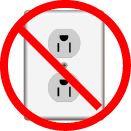
Never plug a generator into a wall outlet (Backfeeding).

Frequenlty Asked Questions

A: It's the American National Standard that defines safety and performance requirements for portable generators, including CO risk-reduction features, construction, labeling, and testing.

A: PGMA develops the standard; ANSI accredits the process and approves it as an American National Standard.

A: No. No standard makes indoor use safe. Operate outdoors only, far from openings, with exhaust pointing away.

A: The G300 standard is the only comprehensive performance and safety standard for portable generators, addressing CO hazards from misuse, in addition to:
  • Fuel and electrical testing, tamper resistance.
  • Safety requirements for generator operation such as electrical shock, overload, cuts, burns, guarding, refueling, overspeed, and stability (tipover) test.
  • Corrosion, vibration, rain, dust, humidity, and more.
UL 2201 only addresses CO hazard from misuse.

A: Plan outdoor placement, confirm working CO alarms, use proper cords for essentials, and consider a professionally installed transfer switch or interlock if you want to power circuits safely. Download these notices and post near where you store your portable generator.

Other Helpful Resources

This page summarizes ANSI/PGMA G300 in plain language for awareness only. It does not replace the full standard, local codes, or your product’s owner’s manual. Always follow manufacturer instructions and local regulations.